







The demand for striking visual communication is at an all-time high. From rapid-growth digital startups in South Delhi to major advertising agencies in Gurgaon and Noida, companies are aggressively hunting for skilled visual storytellers. If you are looking to break into this creative industry, enrolling in a dedicated graphic design course in Delhi is the single fastest way to transform raw creativity into a high-paying career.
However, Delhi’s educational landscape is flooded with options. A quick search will reveal hundreds of institutes promising “100% placements” and “mastery in 3 months.” How do you separate a premium, industry-aligned academy from a generic software-training hub?
This comprehensive guide breaks down exactly what to look for so you can invest your time and money in the right graphic design course in Delhi.
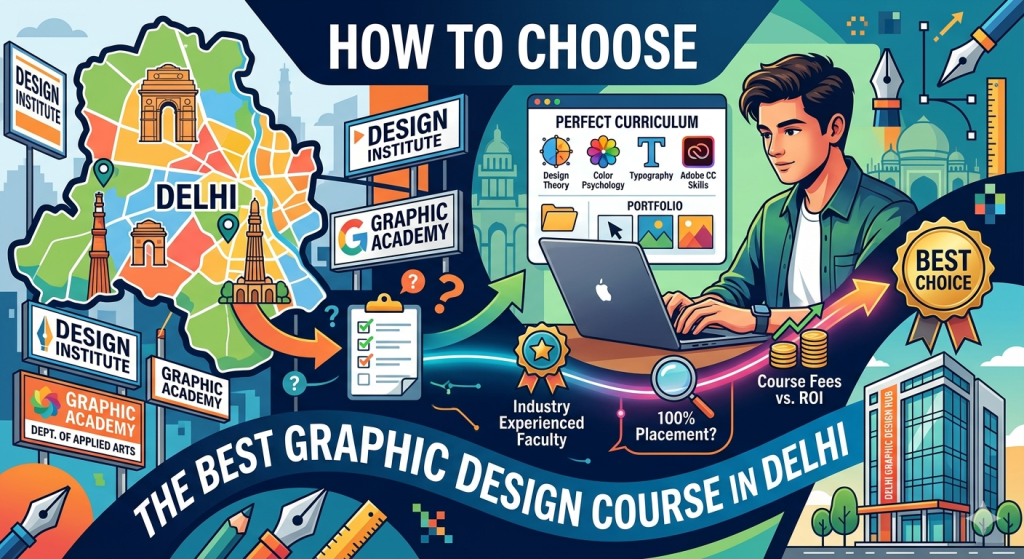
1. Look Beyond the Software: Theory vs. graphic design tools
A common mistake beginners make is equating graphic design solely with learning software. They assume that mastering Adobe Photoshop or Illustrator automatically makes them a designer.
It doesn’t. Software applications are merely tools—the digital equivalent of a paintbrush.
A truly comprehensive graphic design course in Delhi must balance software proficiency with foundational design theory. When evaluating course curriculums, ensure they dedicate substantial time to:
- Typography: The art of arranging type to make written language legible, readable, and visually appealing.
- Color Theory: Understanding how colors interact and the psychological impact they have on an audience.
- Layout and Composition: Mastering grid systems, visual hierarchy, and balance to guide a viewer’s eye naturally.
- Design Thinking: Learning how to approach a client’s business problem and solve it visually.
If an institute’s syllabus reads like a basic software user manual, keep looking. You want a curriculum that teaches you how to think like a designer, not just where to click.
2. Evaluate the Faculty’s Industry Pedigree
Graphic design is a highly practical, fast-evolving field. Standard academic textbooks become outdated within a year. Therefore, your mentors need to be active industry practitioners rather than career theorists.
Before enrolling in any graphic design course in Delhi, research the instructors:
- Do they have a portfolio of real-world client work?
- Have they worked with recognized brands or agencies?
- Do they actively freelance or consult in the current market?
Teachers who are plugged into the contemporary industry understand exactly what creative directors are looking for. They can teach you modern workflows, client management secrets, and real-world problem-solving skills that you won’t find in a software tutorial.
3. Compare Course Formats and Costs
Delhi offers a wide range of learning structures to fit different budgets and timelines. Understanding these formats will help you narrow down your search based on your current career stage.
| Course Type | Ideal For | Typical Duration | Average Fee Range (INR) |
| Short-Term Bootcamps / Certificates | Working professionals, students looking to upskill quickly. | 3 to 6 Months | ₹25,000 – ₹75,000 |
| Professional Diplomas | Comprehensive career switchers wanting deep technical & portfolio focus. | 9 to 14 Months | ₹80,000 – ₹1,500,000 |
| University Degrees (B.Des / B.A.) | Undergraduates seeking an extensive, globally recognized academic foundation. | 3 to 4 Years | ₹4,00,000 – ₹25,00,000+ |
If you are a student or a professional balancing a tight schedule, short-term certificate tracks from reputable local institutes (like SACAC, TGC India, or YMCA) provide excellent, cost-effective structures. If you want a full-scale academic immersion, premium design schools (like NIFT, Pearl Academy, or IIAD) offer intensive degrees but require a significantly higher financial and time investment.
4. Prioritize Portfolio-Driven Learning
In the creative industry, your degree or certificate is secondary to your portfolio. When you sit for a job interview, a creative director will rarely look at your grade sheet; they will immediately ask to see your book of work.
A premium graphic design course in Delhi structures its entire learning path around building a professional-grade portfolio. Look for programs that emphasize:
- Live Industry Briefs: Working on dummy or real client projects with tight deadlines and concrete constraints.
- Diverse Case Studies: Your portfolio should display versatility, featuring branding/logos, packaging design, publication layouts, and social media campaigns.
- Capstone Projects: A final, comprehensive project evaluated by a panel of external industry experts.
Ask the admissions team to show you portfolios of past students. If the alumni portfolios look generic, repetitive, or highly basic, it’s a clear sign that the training lacks creative depth.
5. Inspect the Campus Infrastructure & Location
While online learning has grown significantly, graphic design inherently benefits from a collaborative, physical environment. If you opt for an offline classroom format, visit the campus in person.
Ensure the institute provides:
- Up-to-Date Design Labs: Computers capable of smoothly running heavy rendering software like Adobe Creative Cloud apps.
- Cross-Disciplinary Exposure: Access to scanners, high-quality printing facilities, and digital drawing tablets.
- Creative Hub Proximity: Delhi has distinct creative and commercial hubs. Institutes situated near areas with high agency density—such as South Delhi, Hauz Khas, Okhla, or parts of Noida and Gurgaon—frequently find it easier to bring in guest lecturers and secure localized internship placements.
6. Demystify the “Placement Assistance” graphic design course in Delhi and placement
Almost every institute marketing a graphic design course in Delhi features a bold “100% Placement Support” banner. As a smart consumer, you need to look closer at what that actually means.
During your campus visit or counseling session, ask these specific questions:
- Which specific companies, design studios, or ad agencies recruited from your campus last year?
- What is the average starting salary package for your graduates?
- Do you offer formal training in resume writing, portfolio presentation, and interview preparation?
A reputable institute won’t just hand you a list of open job links. They will actively prepare you for the hiring process by hosting mock interviews, organizing portfolio review days, and leveraging an active alumni network across Delhi NCR to help get your foot in the door.
Summary Checklist for Your Decision
Before signing the enrollment form for any graphic design institute, run through this quick mental checklist:
- Curriculum Check: Does it teach core design principles alongside Adobe software tools?
- Faculty Check: Are the instructors actual design professionals?
- Portfolio Check: Will you leave the course with a minimum of 3 to 5 polished, industry-ready case studies?
- Schedule & Budget: Does the fee structure align with your realistic return on investment (ROI)?
Choosing the right course is all about finding the sweet spot where your personal career goals intersect with a practical, portfolio-first education. Take your time, attend demo classes, audit student work, and select an academy that treats design as a specialized craft rather than a software checklist.